

Field Station brought 30 people together to create a parallel society.
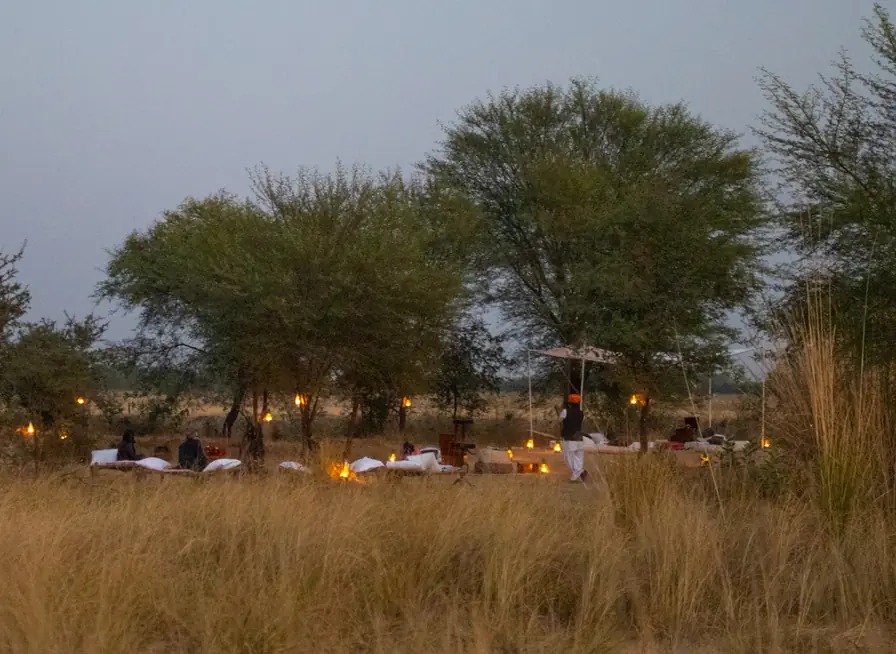
Field Station / Rajasthan was a Logos residency, run with ZuGrama at Dhun from 23 to 31 October 2026.
Independent residents built prototype projects on Logos in eight days. These early proof-of-concept deployments showcase the local-first approach to parallel organising championed by Logos.
- 30
- residents came together to live and build at Dhun.
- 17
- projects built using Logos Basecamp during the residency.
- 1
- new currency (Field Tokens) created at Dhun and spent by residents on meals and goods.
A residency inside a working community
Field Station is a Logos residency that places builders inside a real parallel community for eight days. Residents live where they build, and each project starts from a local problem.
The first Field Station took place at Dhun, a 500-acre regenerative project in Rajasthan's Jaipur district, run with ZuGrama.
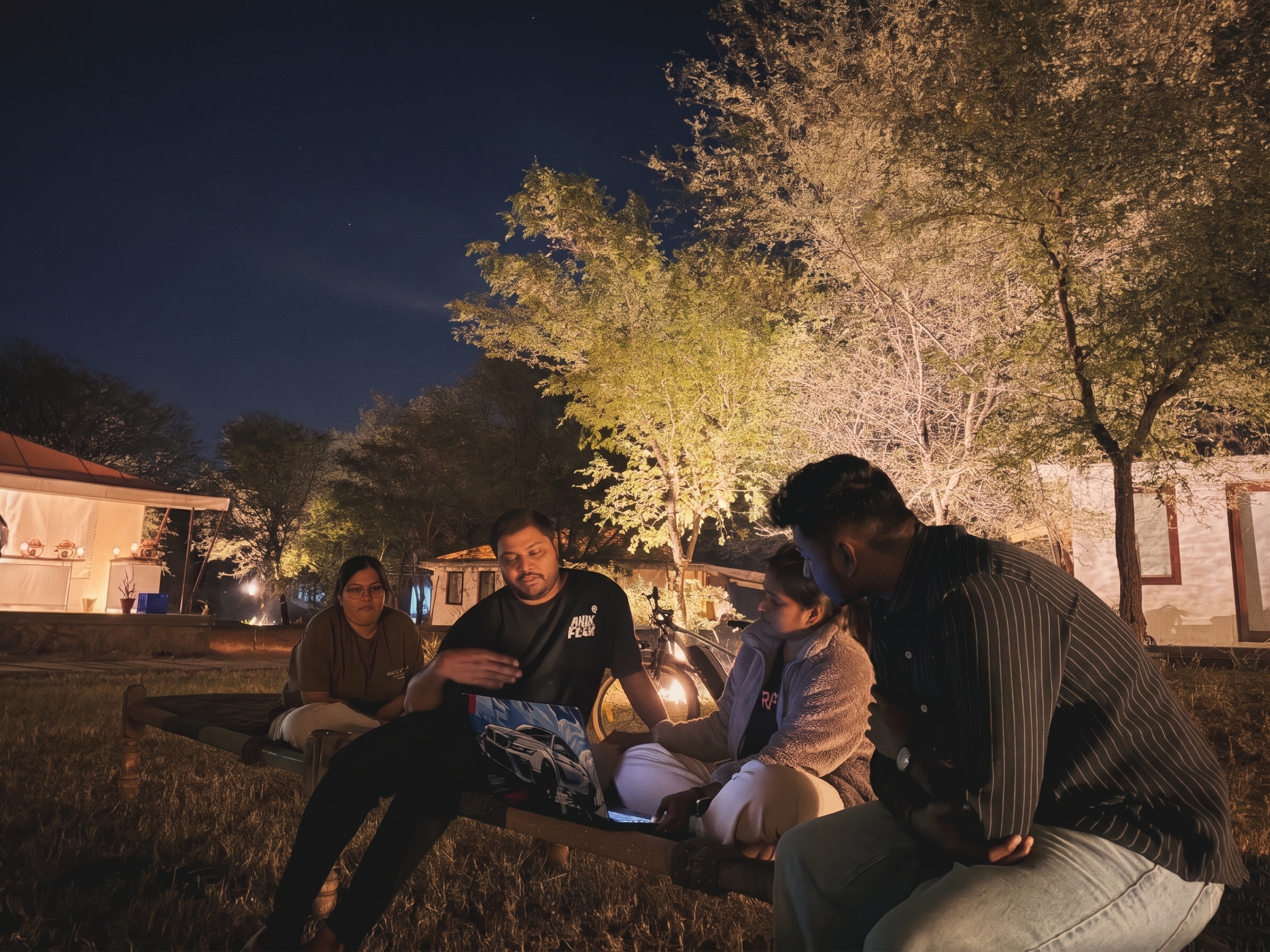
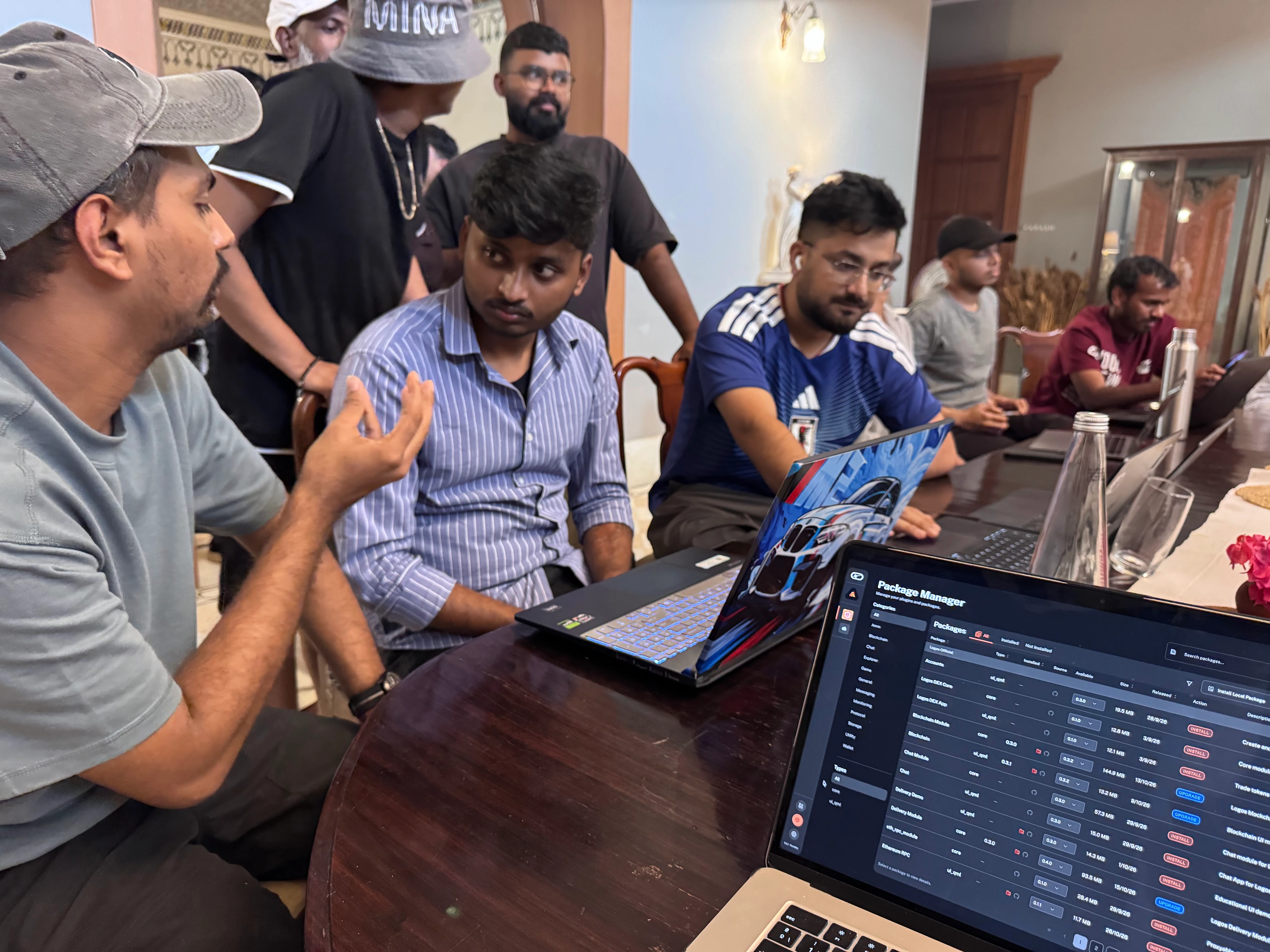
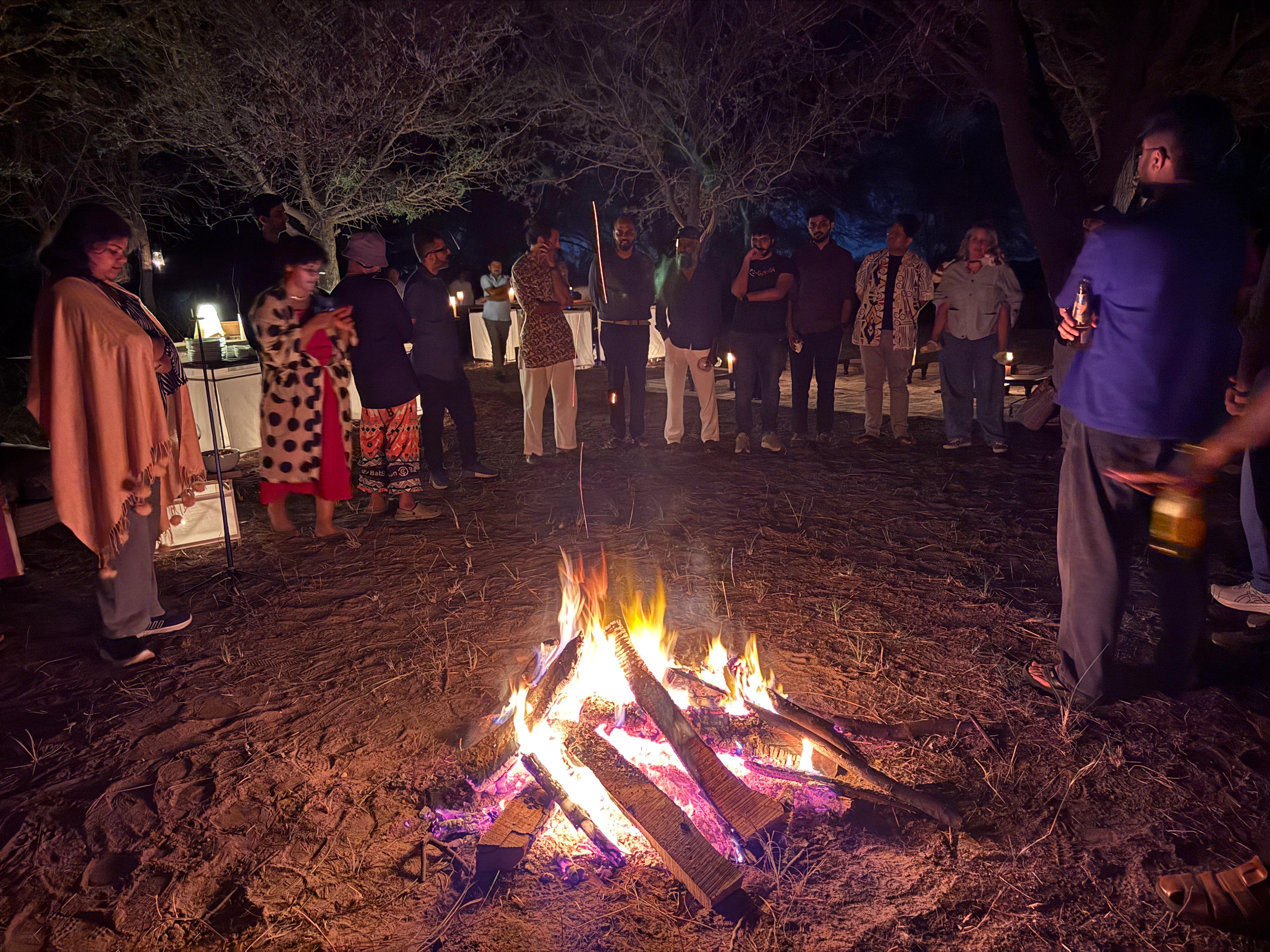
Residents shared meals, walks, and morning rituals. They held sessions on everything from breath work to AI safety, enjoyed impromptu cricket games and music evenings, and shared in meal preparation and hosting. Each day had its own programme of resident-curated activities, as well as a four-hour build cycle.
On the first day, Dhun's founder, Manvendra Singh Shekhawat, asked the residents to build tools that solve local and national challenges.
The Dhun residency ran four tracks:
The Logos Civic Prize
Tools to rebuild civil society, set against two prizes defined by Logos Circles: civic reporting and community response, and privacy-preserving mutual aid.
Sovereignty and Privacy
Private-by-default tools that let people and communities hold their own money, data and records, built on the Logos stack.
d/acc, led by ZuGrama
Decentralised acceleration across AI, neurotech, and bio-resilience, meeting the Logos stack where AI, cryptography, and sovereignty overlap.
Residents
For organisers, artists, writers, and testers who joined to use the tools as they were built, rather than to ship code.
Technology built through community
Logos is a technology stack and a social movement that develop together. The parallel communities putting private, peer-to-peer technology to work also shape the design of the tools comprising the stack.
Field Station aligns both privacy-preserving technology and the movement for parallel societies.
At Dhun, residents designed for households, farms, and the village as a whole.
Living on the land, sharing meals, and measuring their output against the needs of a regenerative community, residents at Dhun came from across India.
Meals were long and phone-free, people walked everywhere, and evenings meant horse rides and cricket on the lawn, played badly and with great enthusiasm.
What the residents built
Four winners were chosen from the 23 applications developed at the residency. These are early proof-of-concept tools running on test networks.
These tools are shared for informational purposes. Code is not reviewed by Logos and may contain bugs, change without notice, or behave unexpectedly.
Offline Zcash
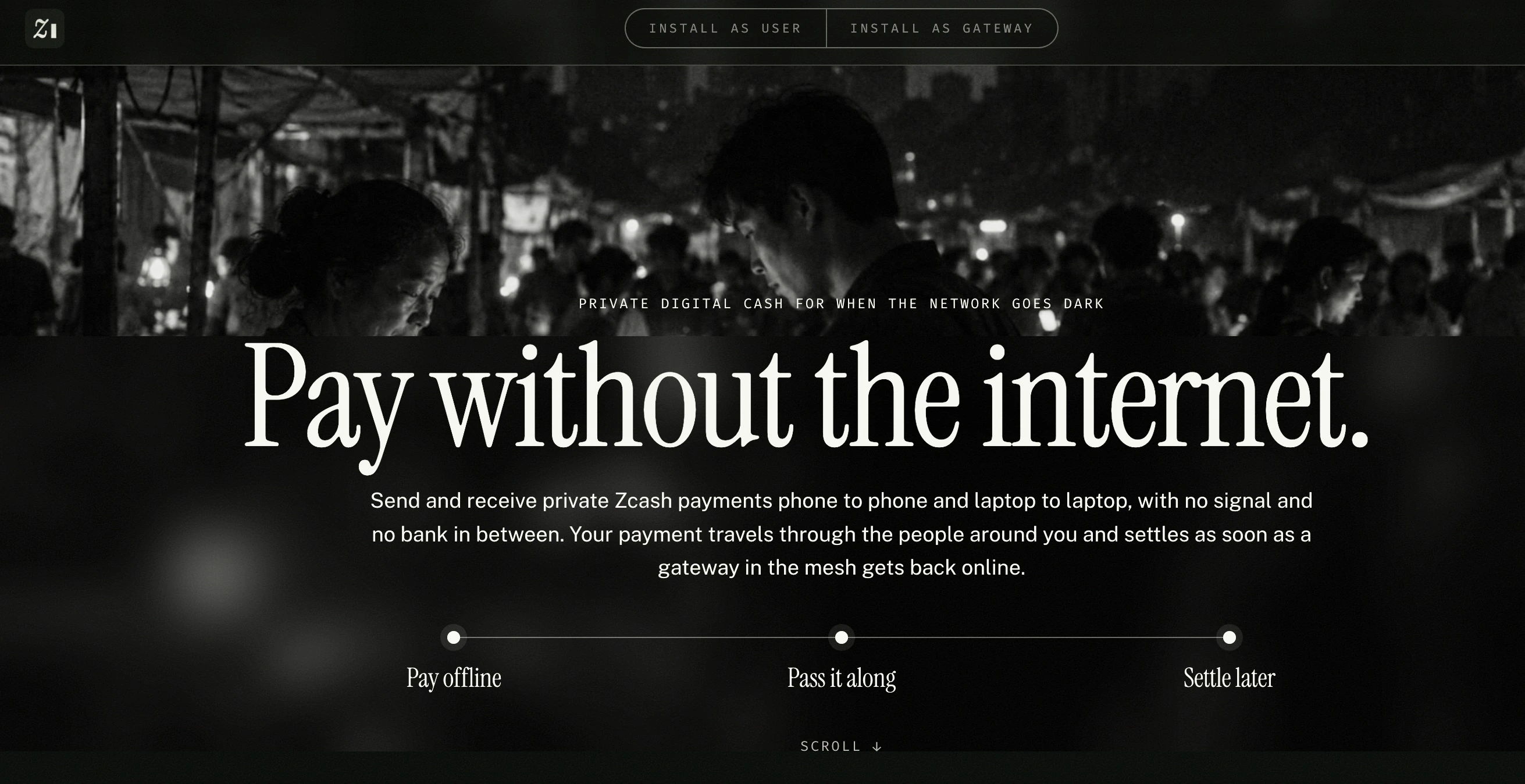
Offline Zcash is an open-source wallet and mesh network for Basecamp that sends private Zcash payments without an internet connection.
The wallet signs a payment on the device. Nearby devices pass the sealed payment along until it reaches the payee, and a gateway with internet access settles it on Zcash later. The devices relaying it cannot read it.
Learn more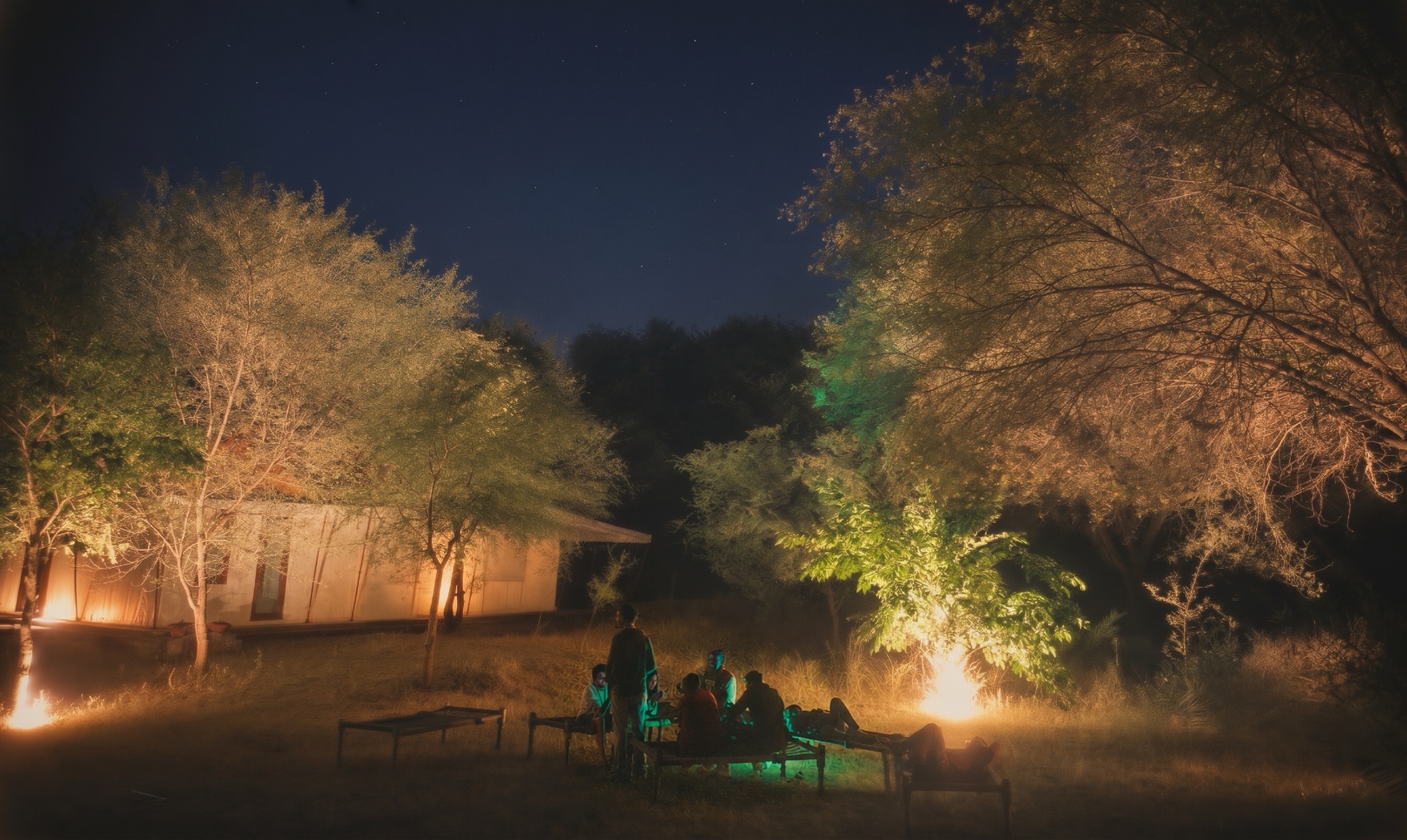
"Culture can be something we consciously experiment with. With Fieldstation and the technological freedoms enabled by Logos, we have an opportunity to explore this in practice. At ZuGrama, we are building a permanent node to put this into a long-term experiment."
"Field Station brought some wonderfully curious people to Dhun. The range of their pursuits and the conviction behind them sparked our imagination. My team and I are keen to see what we might build together."
From prototypes to Circles
Mentorship
The four winners will work with mentors from Logos and ZuGrama across technical work, business development, ecosystem development, and the Logos movement, with in-person support at ZuGrama's space in Bangalore.
Milestone grants
Each winning project will receive milestone-based grant funding to support further development.
Into Logos Circles
Logos contributors will work with each team on extending their project into Logos Circles, so local communities can adopt and use it.
Built on Logos
The Logos tech stack lays the groundwork for peer-to-peer applications built for parallel societies.
The winning projects use the Logos stack for jobs a village would otherwise hand to a central server, demonstrating the real-world utility of tools built for parallel systems.
Logos Delivery
Logos peer-to-peer data transport protocols carry the coordination: reports, confirmations, and approvals pass directly between residents' devices, encrypted to the people taking part without needing a middleman.
Logos Storage
Logos Storage allows users to privately serve and retrieve files between each other themselves without needing to hand custody to a third party.
Logos Execution Zone
The Logos execution stack supports elective privacy, allowing users to choose when and how their value transfers are kept hidden while also enabling public transparency where it is needed.
Local-first on Basecamp
Logos Basecamp is a local-first launcher for peer-to-peer apps built on Logos. It loads each app and the modules it needs on your own machine, with no hosted frontend and no sign-up.
Each winning tool from the Field Station uses Basecamp to remove dependence on a company's server, allowing users to hold their own data.
Run on Basecamp
Bosphorus, Pukaar, Offline Zcash, and Dhun Commons run as apps or modules inside Basecamp.
No central server
Using Logos tools provided through Basecamp, these applications do not rely on servers. They are peer-to-peer.
Bosphorus
A wallet and lending app that runs inside Logos Basecamp
Offline Zcash
Sends private Zcash payments without an internet connection
Dhun Commons
Every release of funds needs two signatures
Pukaar
A decentralised community issue tracker
Zcash
A gateway with internet access settles it on Zcash later
Loads each app and the modules it needs
Logos Delivery
Reports, confirmations, and approvals pass directly between residents' devices
Logos Storage
Privately serve and retrieve files between each other
Logos Execution Zone
Choose when and how their value transfers are kept hidden
Open to all builders
Logos is open to every type of builder and activist, whether you want to create a private peer-to-peer application or organise your peers to create a parallel society.
Install Basecamp
Run the Logos stack on your own machine and try the apps built on it.
Start a Circle
Bring Logos to your own community and use privacy-preserving tools to solve real problems.
Build on Logos
Read the docs, or find funding through RFPs and the λ Prize.
Discover Field Station
Learn about Field Station / Rajasthan.
Field Station shows what happens when a technology stack built for parallel societies meets a movement with local problems in mind.
Field Station / Rajasthan was a Logos residency run with ZuGrama at Dhun. All projects shown are prototypes built by independent residents. None has been audited. They run on test networks, and none should be used with real money.