Setting the Collective Action Snowball in Motion: A Journey in Liberland
Insights from two Logos-driven community river cleanups
Small acts of collective action can spark a snowball effect, inspiring others to take responsibility for their communities and create meaningful change without waiting for permission. Two community cleanups in Liberland show how small victories can inspire others and build momentum from the ground up.
As we sat in the meeting point we’d set, on the morning of our first Liberland community cleanup back in April this year, I began to doubt the whole thing. Did we invite enough people? Could we have done anything better? Did the community even care about the place they live? Why was nobody showing up?
It was my first time at Liberland’s Oasis in Arc Village, and I hadn’t been sure what to expect. We had come for the micronation’s 11th-year anniversary celebrations, hoping to inspire attendees to take action to improve their communities without bureaucracy, red tape, or waiting for permission. We’d talked about it a lot online and off: starting with something simple but organic from the community itself. It doesn’t matter if the feedback loop is small to begin with; winning on issues will inspire others, and with more people, we can take on bigger problems.
At least that was the theory we were working with, but the scant turnout had me second-guessing all that.
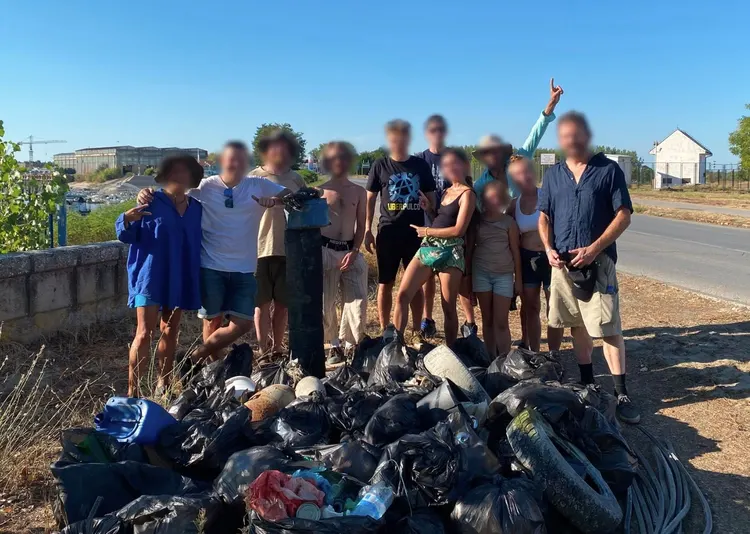
As the meeting time approached, some volunteers did show up – fewer than hoped for, but at least we now had a team to devise a plan with. Equipped with bags, rubbish pickers, and not-so-protective gloves, we headed down to the banks of the Danube and got to work tackling the waste that had been building up for years. What we lacked in numbers, we made up for in positive energy, filling more than 35 rubbish bags from the area.
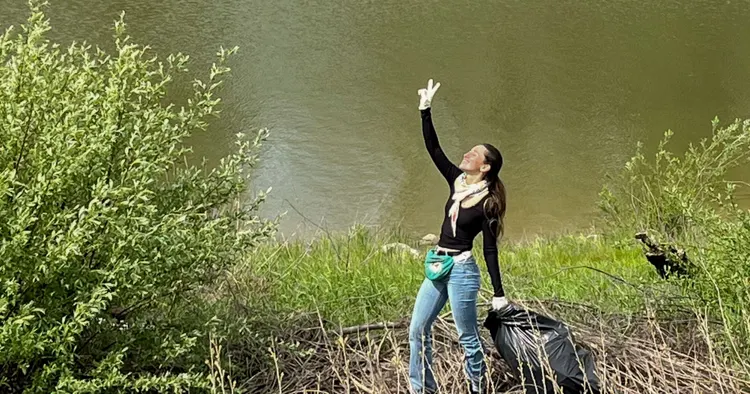
Unfortunately, we weren’t able to find a local steward to continue the work after we left. However, a radio station picked up the story, and our post documenting the cleanup received more than 600 likes and 70 comments in a Facebook community group for the area. The President of Liberland even gave us a shoutout.
We left reassured that we had made an impact, from which maybe future actions could sprout. People did care.
It didn’t matter that they weren’t at the first cleanup. Perhaps they didn’t know how to get involved. Maybe they were waiting for someone else to take the first step. It didn’t really matter. The point was, people reacted. And that showed the problem was real. They appreciated what we were doing. They did care.
So, we decided to return.
A second visit to Liberland
Encouraged by our first expedition’s impact and with plenty of learnings from it, we secured a speaking slot at Liberland’s Floating Man Festival, a seven-day celebration of freedom delivered through music and arts, held in late August. We’d stayed in contact with people from the local community, organised some friends to join us, and wanted to make a very clear statement:
We shouldn’t wait for others to start caring for the places we live.
The second time around, the conditions weren’t exactly on our side. The heat was brutal, and many people from the wider community understandably decided not to join us. Yet, as the meeting spot filled with new and old faces, I felt encouraged. People did care. More people.
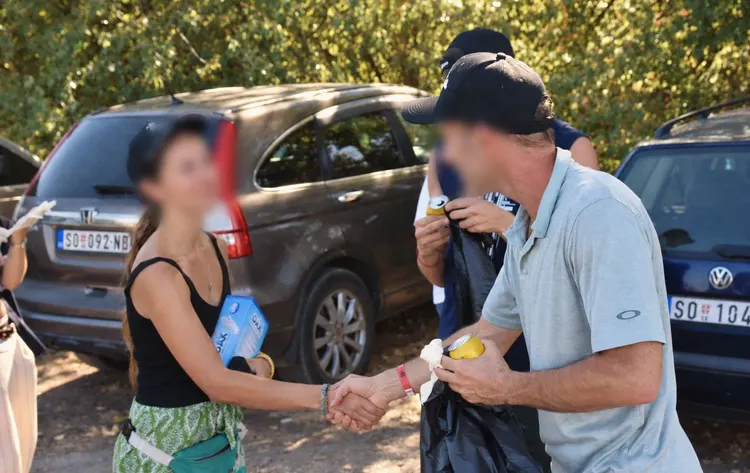
We headed down to the banks of the Danube again, our crew having almost doubled in numbers since the first cleanup. The team we’d assembled spanned generations, with the youngest around 14 and the oldest in their mid-60s.
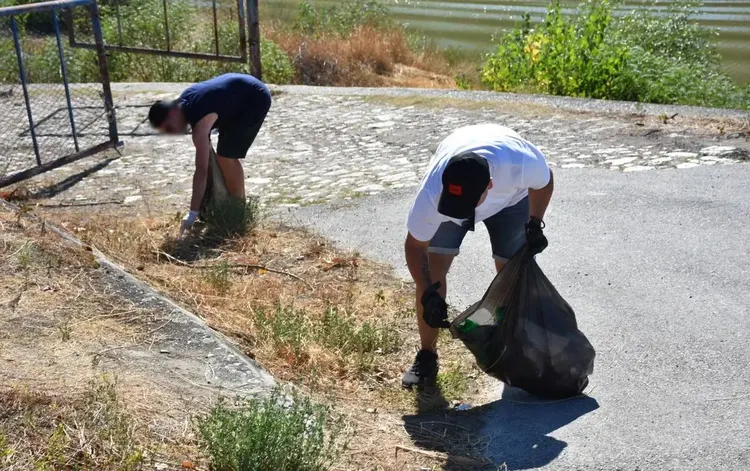
We had music, beers and other refreshments brought along by ourselves and fellow volunteers, and an abundance of positivity. We laughed and conversed as we worked, but mostly focused on the task at hand. The longer we dragged the job out, the longer we’d have to endure the 38-degree August inferno and the longer it’d be before we could reward ourselves with a cold drink under the shade of a tree. By the time I took that first sip, we had gathered more than 50 bags of rubbish from the pathways next to the river.
Radio Danube came to support our efforts again, and I gave my first-ever interview. VidiVamo, a local influencers group that promotes people working to create meaningful change, documented the action, too. These local publicity opportunities are almost as important as the cleanups themselves and should never be passed up. They’re a chance to amplify our work, and discovering that these kinds of initiatives exist is the first step towards people getting involved.
The online responses we received to the second cleanup made things even clearer. Our follow-up post about the collective action received more than 420 likes and 30 comments in the community Facebook group, while another post, “Help Appeal by the Danube”, received more than 150 likes and 20 comments.
It would be easy to look at the bags of rubbish removed and the social metrics and say that the initiative was successful because we made the area cleaner and the posts received engagement. However, the numbers weren’t what stood out to me most; the actual conversations beneath those posts were what really convinced me that we were making a difference and that it was growing.
People started pointing out other problems in the area, other areas overlooked by municipal services. They were starting to think about actions they could take to improve their own community. From the comments, we learned about an informal dumping spot next to a local kindergarten. If rubbish keeps appearing in the same place, you have to ask, “Why?”
Is there infrastructure missing? Are there clear signs discouraging littering? Who is supposed to maintain the area? And, perhaps most importantly, are children growing up learning that caring for the environment is part of caring for each other?
We concluded that something simple, such as installing clear signposts reminding residents and visitors to dispose of their waste responsibly, was an appropriate first response. It’s a basic idea, but sometimes small interventions are exactly where lasting change begins.
Then came perhaps the most encouraging part of the whole experience – the real proof that what we were doing was having an impact and that impact was snowballing.
A young couple who had seen our posts documenting the cleanups took it upon themselves to clean up a local creek. They inboxed me to show their efforts, and it was truly inspirational to see our work encouraging others to act.
They didn’t wait for us to organise it. They didn’t wait for someone else to tell them what to do.
They just went and did it, the two of them filling 12 bags of rubbish during an afternoon.
That, to me, is the real point of this kind of action.
A single cleanup isn’t going to solve every environmental problem around the Danube. Fifty bags of rubbish won’t suddenly create a sustainable local ecosystem.
But one word can start a conversation.
A conversation connects people.
And a group of people can take on projects that an individual would struggle to achieve.
And people see others' efforts and want to get involved themselves.
As the snowball gains momentum, it becomes unstoppable.
Decentralised parallel structures aren’t just about creating alternative institutions or talking about sovereignty. They’re also about looking at the place around you and asking: What can I take responsibility for?
True sovereignty begins with shared responsibility for the space we inhabit. That can start with someone seeing something as simple as a normal person picking up a bag of rubbish from a public area and getting inspired to do the same. This is why Logos Circles exist: to provide the infrastructure and networks for grassroots community initiatives, to start taking action without waiting for permission.
Learn more about Logos Circles / Join a Circle near you / Propose a new Circle