Nick Merrill: The FBI Letter He Couldn’t Tell Anyone About
In 2004, an FBI agent handed Nick Merrill a letter he wasn't allowed to tell anyone about. Twenty-five years after the PATRIOT Act became law, he tells the whole story.
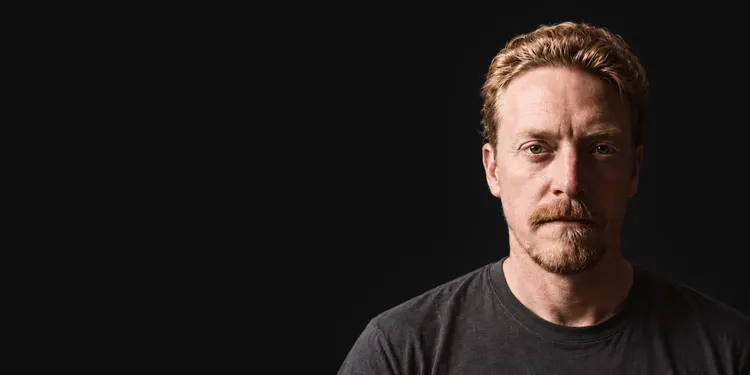
Three years after 9/11 and the US government's enacted surveillance act (The PATRIOT Act), Nick Merrill - an ISP provider serving customers since the 90's, received a letter from the FBI accompanied by a gag order. He spent years challenging in court. Twenty-five years later, he tells the whole story.
25 years ago today, the USA PATRIOT Act was signed into law. The final bill was introduced in the House on 23 October 2001 and passed there 357 to 66 the next day. The Senate passed it 98 to 1 a day later. Among much else, it widened the FBI's power to demand records with a national security letter.
A national security letter is a type of administrative subpoena that requires no warrant and is designed to help law enforcement or intelligence agencies gather information for national security or terrorism investigations.
In 2004, Nick Merrill received one of those letters. Nick ran Calyx Internet Access, an ISP he had started in New York in the mid-1990s, from an office about ten blocks north of the World Trade Centre site.
First came a phone call. As Nick recalls it, the caller said, "I'm calling from the FBI and I have a letter for you". Less than an hour later, an agent was knocking on his office door. The letter, which ran about three pages, asked for records on one of his clients and listed the types of data the FBI wanted. It also included a gag order.
"It said that I could tell no person that they had asked me for this info. And I stopped there," Nick says. "I looked up at the FBI agent and I said, but what about my lawyer?" The agent told him he was only there to deliver the letter and couldn't answer his questions.
Challenging the national security letter
A national security letter doesn’t require any warrant. As Nick says, “the standard for a national security letter is relevance... It's their unilateral declaration of relevance". This was standard practice from government agencies. The Patriot Act's core mechanisms allowed the government to search first and, if challenged at all, forced the target or recipient to prove the search unjustified, in secret, against a "relevance" standard the FBI set for itself.
The gag order had an immediate impact on his personal life. "My parents were both living at that time. I had a girlfriend I'd been with for years. I couldn't tell any of them that any of this stuff was going on. So if I had just disappeared they would have no idea why."
He called a lawyer anyway. "I knew that I could always talk to a lawyer. That's just unquestionable. That is a basic right".
His business lawyer pointed out that the New York Civil Liberties Union, the New York branch of the ACLU, was one of the ISP's pro bono clients. Nick had hosted its website for free for years. The ACLU and the NYCLU took the case.
What followed was ten years of litigation: about seven years with the ACLU, then three with a law clinic at Yale Law School. The case began in 2004 under a pseudonym as Doe v. Ashcroft. In August 2010, Nick was allowed to say who he was. In September 2015, a federal judge finally lifted the gag order in full.
In his telling, the government lost, appealed, and lost again. "And then what they decided to do was change the law". As Nick describes it, the amended rules let recipients consult a lawyer and gave them a way to challenge a letter in court.
He doesn't think that fixed the core problem, though: "So all of a sudden now the burden is on the recipient rather than on the government".
He doesn't paint the agencies as villains.
"I do believe that at least on some level the people in the counterintelligence and anti-terrorism parts of the government really did want to protect the country from threats that were on some level real."
However, he feels strongly that the foundational, bedrock principles enshrined in the Constitution and the Bill of Rights should be protected.
Whoever holds the records is exposed
The FBI reached Nick's customers through Nick because his ISP held their records, and logging their data was the default configuration of his system.
"The default way that Unix works is it keeps logs of everything that happens," he says. "This is just how things come out of the box. All the systems keep records of everything."
Anyone who relies on a service that keeps records about them carries the same exposure, and so does whoever runs it.
Logos builds infrastructure that aims to mitigate this risk, by ensuring data and the transport it moves over are private and decentralised.
Nick went on to found the Calyx Institute, a nonprofit named after the ISP, and spent 15 years there building privacy tools such as Tor exit nodes, encrypted chat over Tor, and a version of Android with Tor built in.
Those years left him with three priorities: to encrypt communications, counter metadata analysis, and counter location tracking.
"At first it seemed like the most important thing is to encrypt the contents of people's communications. But then it became evident that metadata was maybe even more dangerous.”
Metadata privacy has also been an area of interest for Logos, the technology stack and movement for a private and decentralised internet. Logos aims to degrade the ability of observers to reconstruct who talks to whom, when, and how often, even against a sophisticated adversary watching the network.
Logos Chat encrypts conversations end to end, Delivery transports those messages over a peer-to-peer network through a mixnet, and spam resistance is enabled by rate limiting through RLN.
Logos Testnet v0.3 has been live since 30 September and is open for anyone to build and experiment on. In this early stage of deployment, Chat accounts don't yet persist across sessions, and Storage downloads over Mix protect the downloader but not yet the provider.
The interview also touched on the same problem in money, with Corey noting that blockchain settlement is tamper resistant but very transparent.
On Logos Blockchain, Cryptarchia keeps validator identities and stake hidden, and the Logos Execution Zone (LEZ) supports private accounts and shielded transfers. Base-layer notes on Bedrock stay public, and private balances live on the LEZ.
A journey towards privacy
Nick says that people should view privacy not as a binary feature but as an incremental journey towards better protection online.
"One of the problems I see in the privacy space is just total binary thinking," Nick says.
"If you gain a 30% increase in privacy over what you had before and you didn't have to give up very much to get it, that's a huge win that allows you to then catch your breath, think of what you're going to do next, then take another step that will get you another 15% more privacy."
He points to encryption in transit. "Virtually all web browsing traffic is encrypted in transit now. These are huge wins that came just in the past 10 or 15 years."
Improving privacy can be as simple as just raising the cost of surveillance. "We can make it economically unfeasible to just mass dragnet surveil everyone,” he says.
If you’re interested in building a more private digital world, you can play your part by installing Basecamp, the launcher for private, peer-to-peer apps built on Logos.
In a future session with Nick Merrill, we will look at Bluetooth mesh networks, post-quantum cryptography, and Phreeli. Post your questions to Nick in the forum thread and he’ll answer them.
Watch the full episode on YouTube.
Join the discussion on the Logos Forum.
Build the parallel.